Internal vs. External Stye: Key Differences Explained | St. George Eye Center
Internal Stye vs. External Stye: What's the Difference?
Most people picture a stye as a small, obvious bump right at the edge of the eyelid, and often that is exactly what it looks like. But styes can also form deeper inside the eyelid, out of plain sight, and these tend to feel quite different from the more familiar surface bump. Knowing which type you are dealing with helps you understand what to expect and when it is time to move beyond home care.
At St. George Eye Center, we evaluate both types of styes regularly. This guide breaks down the difference between an internal stye and an external stye, what causes each, how their symptoms compare, and the specific signs that call for professional treatment rather than more waiting.
What Is a Stye?
A stye, medically called a hordeolum, is a localized infection involving one of the small glands in or around the eyelid. Bacteria, usually the same type that live harmlessly on the skin, infect the gland and cause it to become inflamed, swollen, and tender. The difference between an internal and external stye comes down to which specific gland is affected and where the resulting swelling develops.
What Is an External Stye?
An external stye forms at the edge of the eyelid, right along the lash line. It develops when an eyelash follicle or one of the small oil glands near the base of the lashes becomes infected. This is the more common and more familiar type of stye.
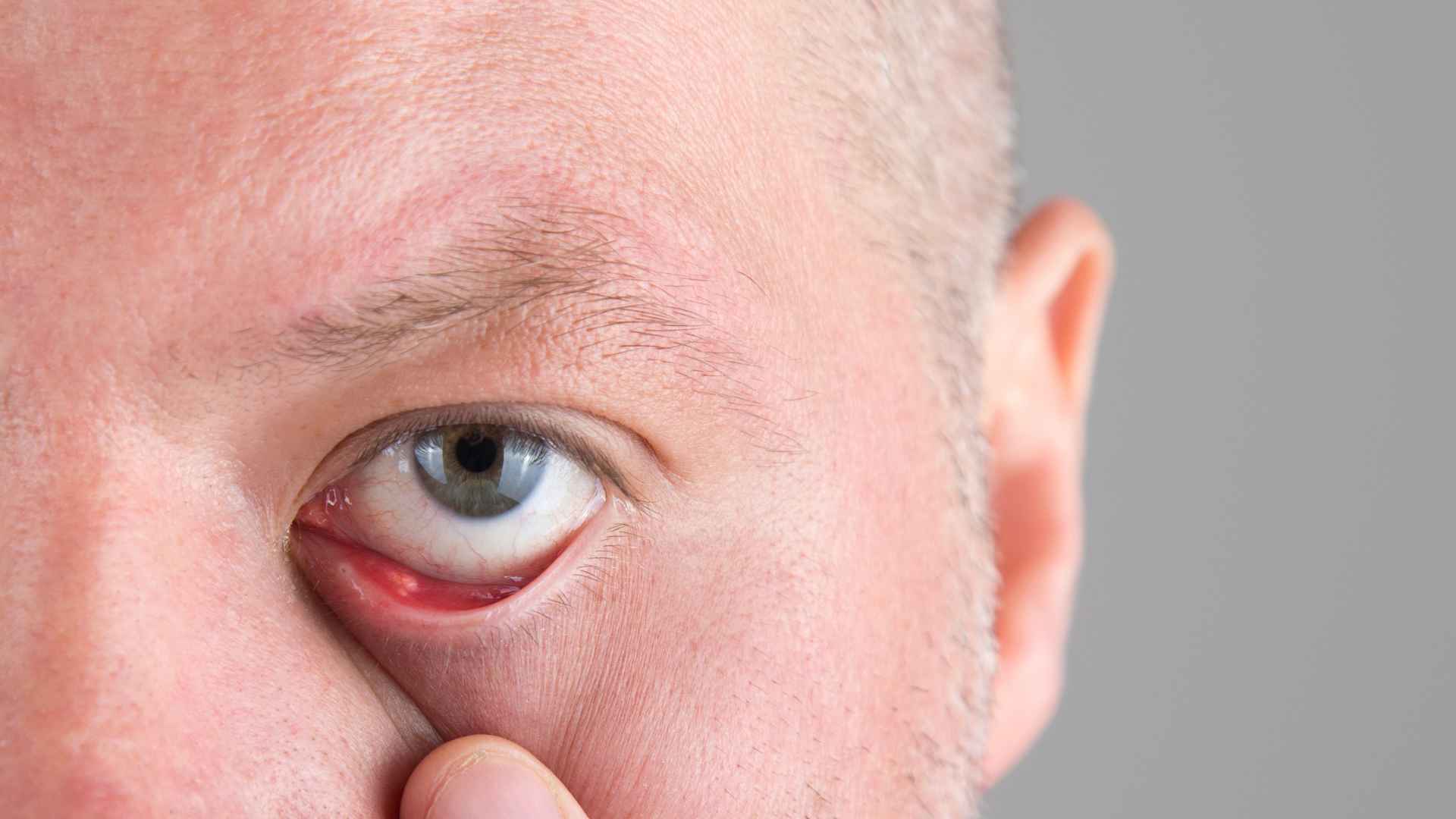
What it looks like: An external stye typically appears as a small, red, raised bump right at the lash line, often resembling a pimple. It may develop a visible white or yellow head as it matures.
What it feels like: Tenderness and mild to moderate pain are common, particularly when blinking or touching the area. The surrounding eyelid often looks swollen and red as well.
Typical timeline: External styes usually develop quickly, sometimes within a day, and often come to a head and drain on their own within about a week.
What Is an Internal Stye?
An internal stye forms deeper within the eyelid, involving one of the meibomian glands, the oil-producing glands positioned further back from the lash line, inside the eyelid tissue itself. Because the infection develops beneath the surface rather than right at the edge, an internal stye is not always immediately visible from the outside.
What it looks like: Rather than a visible external bump, an internal stye often causes generalized swelling of the eyelid. In some cases, the infected area is only visible when the eyelid is gently turned inside out during an eye exam.
What it feels like: Internal styes are frequently more painful than external ones. Because the swelling is contained within the deeper eyelid tissue rather than able to drain outward easily, pressure and discomfort tend to build more noticeably. Some patients describe a persistent, deep ache in the eyelid rather than the more surface-level irritation typical of an external stye.
Typical timeline: Internal styes often take longer to resolve than external styes, since the infection has fewer paths to drain naturally. They are also more likely to develop into a chalazion, a firm, often painless lump that can persist for weeks if the underlying blockage and inflammation do not fully clear.
Key takeaway: External styes form at the lash line and usually drain outward on their own, while internal styes form deeper in the eyelid, tend to hurt more, and are less likely to resolve without help.
What Causes Each Type
Both types share similar underlying causes, though the specific gland involved differs.
Common contributing factors for both types include:
Touching or rubbing the eyes with unwashed hands
Sleeping in eye makeup or using contaminated cosmetics
Not replacing eye makeup regularly
Poor contact lens hygiene
Chronic blepharitis, or inflammation along the eyelid margin, which increases susceptibility to both types
Skin conditions such as rosacea that affect oil gland function
External styes are more directly tied to eyelash follicle infection, while internal styes are more closely linked to meibomian gland blockage, similar to the mechanism behind chalazia and meibomian gland dysfunction.
Home Care for Mild Cases
For a straightforward external stye, warm compresses applied for 10 to 15 minutes, several times a day, are typically the most effective first step. This helps loosen the blockage and encourages natural drainage. Gentle lid hygiene and avoiding eye makeup or contact lenses until the area heals also support recovery.
Internal styes can sometimes respond to the same warm compress approach, though because the swelling is deeper, relief tends to take longer and improvement can be less obvious in the early days. As with any stye, never attempt to squeeze or pop it, since this can push the infection deeper or spread it to nearby tissue.
When to Seek Care Rather Than Wait It Out
Certain signs mean it is time to move past home care and get an evaluation, regardless of which type of stye is involved.
Pain becomes severe rather than mild to moderate tenderness
Swelling spreads beyond the eyelid to the surrounding face
The stye has not improved after 10 to 14 days of consistent warm compresses
Vision becomes blurry or otherwise affected
A fever develops along with the eyelid swelling
The stye keeps recurring in the same area
An internal stye seems to be worsening rather than gradually settling, since these are more prone to complications when left untreated
Internal styes in particular deserve a lower threshold for seeking evaluation, since their deeper location means home care is often less effective and complications can develop with less obvious warning than an external stye typically shows.
Get It Checked Rather Than Guess
Telling an internal stye apart from an external one, and understanding what each needs, is not always straightforward without a proper eyelid exam. If your stye is painful, growing, or simply not improving the way you expected, do not wait through more uncertainty.
St. George Eye Center offers walk-in urgent eye care, with no appointment needed and experienced providers who can determine exactly what is happening and recommend the right treatment. Visit St. George Eye Center to learn more, or contact us if you have questions about your symptoms.
