Stye vs. Pimple on Eyelid: How to Tell the Difference | St. George Eye Center
Is It a Stye or a Pimple on Your Eyelid?
The skin around your eyes is thin and sensitive, and any bump that shows up there tends to get noticed fast. Most people jump straight to calling it a stye, but eyelid bumps actually fall into a few different categories, including a genuine skin pimple that has nothing to do with the eye's glands at all. Telling these apart helps you know whether a warm washcloth will fix it or whether it needs more targeted care.
At St. George Eye Center, this is one of the more common questions we hear from patients examining a new bump in the mirror. This guide walks through the differences between a stye, a chalazion, and an ordinary pimple near the eyelid, based on appearance, location, and how much it actually hurts.
Why Eyelid Bumps Are Easy to Mix Up
The eyelid skin sits close to several different structures: hair follicles for the lashes, oil-producing glands specific to the eye, and ordinary skin pores just like anywhere else on the face. A bump can originate from any of these, which is exactly why three very different conditions can look fairly similar at a glance.
A True Stye
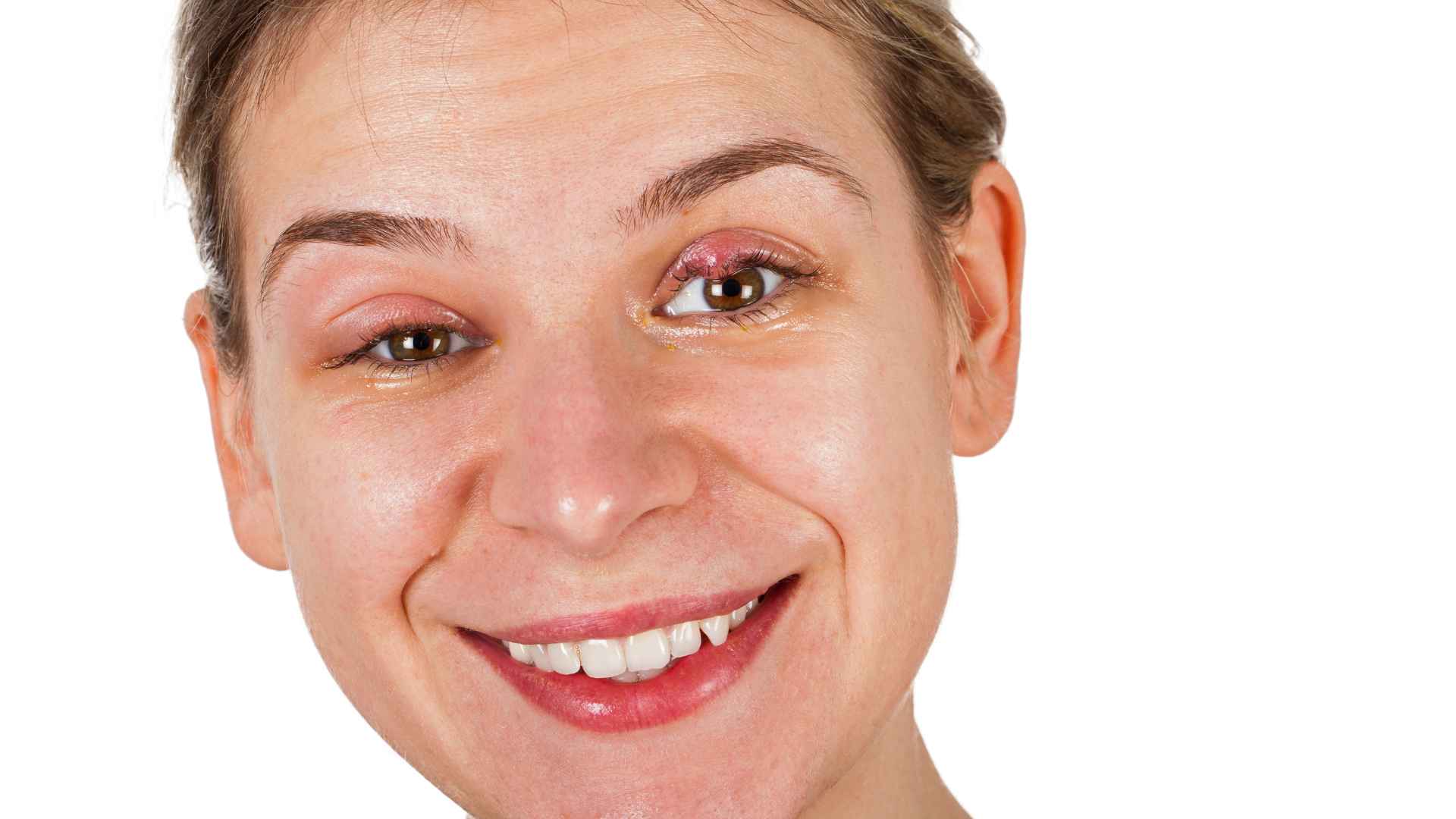
A stye, or hordeolum, forms when an eyelash follicle or one of the small oil glands right at the lash line becomes infected with bacteria.
Appearance: A small, red, raised bump directly at the edge of the eyelid, often with a visible white or yellow head, similar in look to a pimple.
Location: Always right along the lash line, since it involves the follicle or gland at the base of an eyelash.
Pain level: Tender to touch, often sore enough to notice with every blink. The surrounding area is usually red and mildly swollen.
Timeline: Appears quickly, often within a day, and typically drains and resolves within one to two weeks with warm compresses.
A Chalazion
A chalazion develops differently. It forms when a meibomian gland, positioned farther back from the lash line inside the eyelid, becomes blocked, allowing oil to build up behind the blockage.
Appearance: A firm, round lump, generally without the pimple-like head a stye often has. It can grow larger than a typical stye over time.
Location: Usually sits farther from the lash line than a stye, closer to the middle of the eyelid.
Pain level: Often painless, or only mildly tender in the first day or two, which is one of the clearest ways to distinguish it from a stye.
Timeline: Develops more gradually over several days and can take weeks to fully resolve, sometimes requiring an in-office procedure if it does not clear with home care.
An Actual Skin Pimple
This is the category people often overlook. The eyelid, like the rest of the face, has ordinary skin pores that can become clogged with oil and dead skin cells, just like a pimple anywhere else. This is not related to the eye's specialized glands at all.
Appearance: Looks like a typical whitehead or small pimple, often smaller and less inflamed-looking than a stye. It may have a visible white center.
Location: Can appear anywhere on the eyelid skin, including areas farther from the lash line than either a stye or chalazion would typically involve, such as closer to the eyebrow or on the outer eyelid skin away from the margin.
Pain level: Usually minimal to no pain, similar to a typical facial pimple elsewhere.
Timeline: Tends to resolve within several days to a week on its own, similar to how a pimple elsewhere on the face would behave.
Key takeaway: Location relative to the lash line and pain level are the two most useful clues. A tender bump right at the lash line points to a stye, a painless firm lump farther back points to a chalazion, and a typical low-pain whitehead away from the lash line is often just a pimple.
Quick Comparison
A few side-by-side details can help clarify things further.
Stye: Right at the lash line, tender, appears quickly, resembles a pimple with a head
Chalazion: Farther from the lash line, usually painless, firm and round, develops slowly
Eyelid pimple: Anywhere on the eyelid skin, minimal pain, small whitehead appearance, resolves like an ordinary facial pimple
What Not to Do With Any of These
Regardless of which one you are dealing with, avoid squeezing or popping it. The eyelid skin is delicate, and squeezing any of these bumps risks pushing infection deeper, spreading bacteria to nearby glands, or causing irritation and scarring. Warm compresses, gentle hygiene, and time are the safer path for all three types in their early stages.
When to Seek an Evaluation
Most eyelid bumps, whatever the type, improve with basic home care. Certain signs, however, mean it is time to have it examined rather than wait longer.
The bump is growing larger or more painful instead of improving
Redness or swelling spreads beyond the immediate area
The bump has not improved after one to two weeks
Your vision becomes blurry or otherwise affected
You develop a fever alongside the swelling
The bump keeps recurring in the same spot
You are simply unsure which type of bump you are dealing with
That last point matters more than people often realize. Since a stye, a chalazion, and a pimple can respond differently to treatment, getting an accurate diagnosis is often the fastest path to actual relief, rather than trying one home remedy after another.
Get It Checked Instead of Guessing
If a bump on your eyelid is not behaving the way you expect, or if it is painful and growing rather than settling down, do not wait through more uncertainty. St. George Eye Center offers walk-in urgent eye care, with no appointment needed and experienced providers who can identify exactly what you are dealing with.
Visit St. George Eye Center to learn more, or contact us if you have questions about a bump that is not improving on its own.
